Demystifying Hyperbaric Oxygen Therapy for Health Optimization
Oxygen is the most fundamental requirement of human biology. Every cell in the body depends on it for energy production, repair, and survival. Yet despite its central role in health, oxygen delivery is rarely optimized—and rarely even discussed—in the context of preventive or longevity medicine.
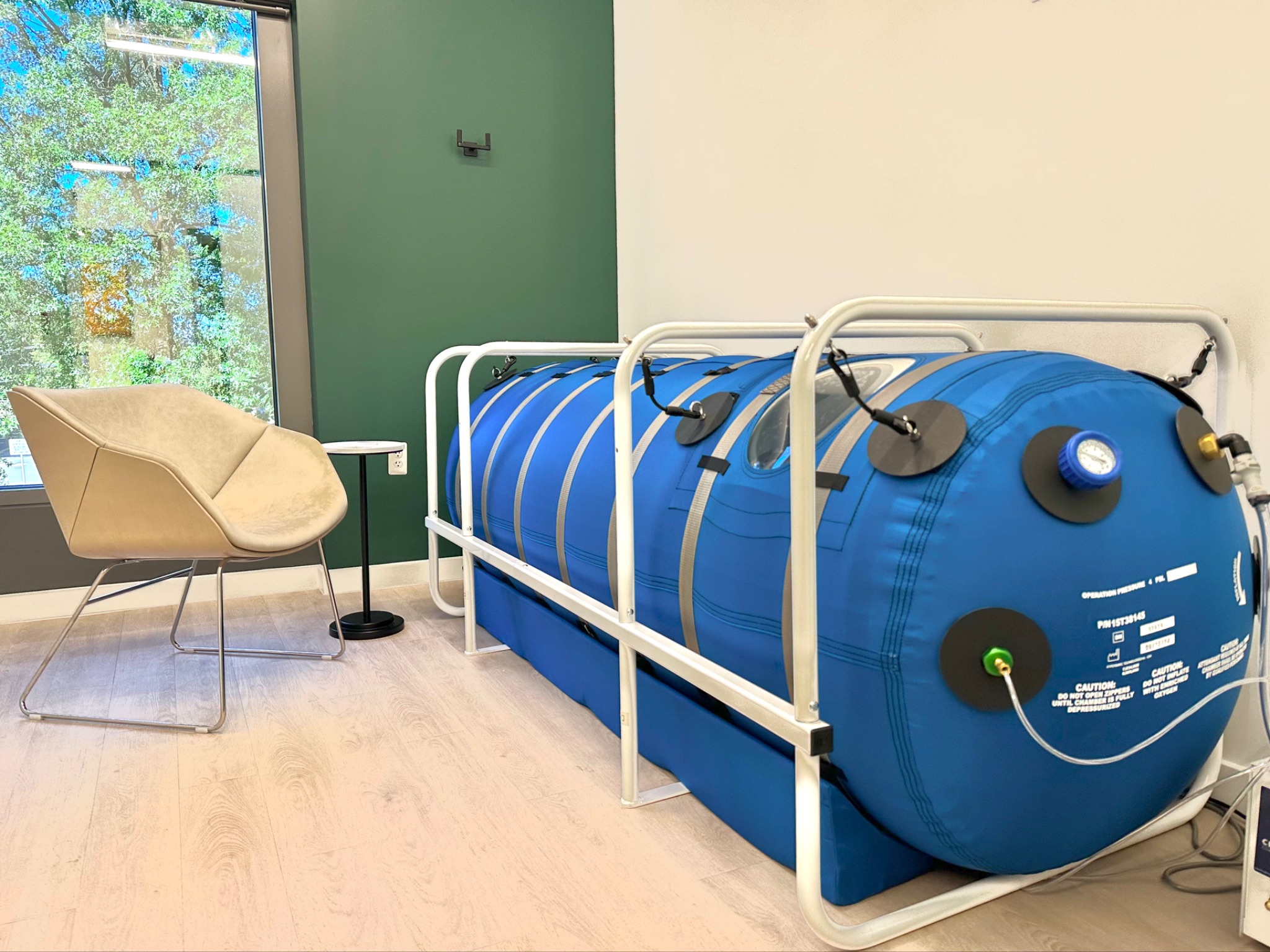
Hyperbaric oxygen therapy (HBOT) changes that equation. By delivering 100% oxygen under increased atmospheric pressure, HBOT dramatically increases the amount of oxygen dissolved in plasma, allowing it to reach tissues and organ systems far beyond what normal breathing or even supplemental oxygen can achieve. The result is a measurable shift in how the body heals, recovers, and maintains itself at the cellular level.
For decades, HBOT was primarily associated with wound care and decompression sickness. Those remain valid and FDA-approved applications. But the emerging science tells a broader story. Accumulating evidence now positions HBOT as a serious clinical tool for reducing systemic inflammation, supporting brain health, accelerating recovery, and potentially influencing the biological aging process itself. Understanding the full scope of hyperbaric oxygen therapy benefits requires moving past outdated assumptions and examining what the science actually shows.
How Hyperbaric Oxygen Therapy Works
Under normal conditions, oxygen is carried almost exclusively by hemoglobin in red blood cells. This delivery system is effective but limited. Hemoglobin has a fixed carrying capacity, and certain tissues—particularly those that are inflamed, injured, or poorly perfused—receive less oxygen than they need to repair and function optimally.
HBOT bypasses this limitation. Inside a pressurized chamber, typically at 1.5 to 2.0 atmospheres absolute (ATA), oxygen dissolves directly into the blood plasma at concentrations far exceeding what hemoglobin alone can deliver. This hyper oxygenated plasma penetrates tissues more deeply and more uniformly, reaching areas that red blood cell cannot easily access.
At the cellular level, this oxygen surplus triggers a cascade of physiological responses. Mitochondria—the energy-producing organelles within every cell—function more efficiently under increased oxygen availability, producing more ATP (the body’s primary energy currency) and generating the raw material for cellular repair. HBOT also stimulates angiogenesis, the formation of new blood vessels, which improves long-term oxygen delivery to previously underserved tissues. It mobilizes stem cells from bone marrow into circulation, up regulates antioxidant enzyme production, and modulates gene expression in ways that favor tissue regeneration over degradation.
These are not theoretical mechanisms. They have been demonstrated across a growing body of preclinical and clinical research, and they form the foundation of HBOT’s expanding role in health optimization.
Inflammation and Healing: The Core Mechanism
Chronic low-grade inflammation is now recognized as one of the central drivers of aging and age-related disease. Often referred to as “inflammaging,” this persistent inflammatory state accelerates cardiovascular decline, metabolic dysfunction, neurodegeneration, and tissue breakdown—often years before symptoms become apparent.
HBOT directly addresses this process through multiple anti-inflammatory pathways. Research demonstrates that hyperbaric oxygen exposure reduces pro-inflammatory cytokines including TNF-α and IL-6, while simultaneously up regulating anti-inflammatory responses. It promotes the resolution of inflammation rather than merely suppressing it, which is a critical distinction. Suppression without resolution often leads to chronic, smoldering tissue damage. Resolution restores the tissue to a genuinely healthy baseline.
At the tissue level, this translates into accelerated wound healing, reduced edema, and improved recovery from both acute injury and chronic inflammatory conditions. HBOT enhances collagen synthesis, supports connective tissue integrity, and improves micro vascular function—effects that are relevant not only to injury recovery but to the broader goal of maintaining structural and functional health across decades.
For individuals pursuing longevity-focused care, the capacity of HBOT to modulate inflammation and healing at a systemic level makes it a compelling tool within a comprehensive clinical strategy. Inflammation is not merely a symptom to manage. It is a biological process to be understood, measured, and influenced with precision.
HBOT and Brain Health
Perhaps the most significant area of emerging HBOT research involves its effects on the brain. Cognitive decline is among the most feared consequences of aging, and for good reason—it is progressive, poorly treated by conventional medicine, and profoundly impacts quality of life. The evidence supporting HBOT brain health applications continues to grow in both breadth and rigor.
The brain is uniquely vulnerable to oxygen deprivation. Although it accounts for roughly two percent of total body weight, it consumes approximately twenty percent of the body’s oxygen supply. Even modest reductions in cerebral perfusion can impair memory, executive function, processing speed, and emotional regulation.
HBOT addresses this vulnerability directly. Clinical studies from Tel Aviv University and the Sagol Center for Hyperbaric Medicine have demonstrated that repeated HBOT sessions in healthy aging adults significantly improve cerebral blood flow, with corresponding improvements in attention, information processing speed, and executive function. These cognitive gains correlated with measurable increases in brain perfusion documented on advanced MRI imaging.
The underlying mechanisms are multifaceted. HBOT stimulates neuroplasticity—the brain’s ability to form new neural connections and reorganize existing ones—through up regulation of brain-derived neurotrophic factor (BDNF), a protein critical to learning, memory, and neuronal survival. It promotes neurogenesis in regions associated with memory formation and supports synaptogenesis, the creation of new synaptic connections between neurons. HBOT also reduces neuroinflammation, which has been increasingly linked to cognitive decline, mood disorders, and neurodegenerative disease.
Randomized controlled trials have also demonstrated benefits in post-concussion syndrome and traumatic brain injury, with patients showing significant improvements in memory, executive function, and overall cognitive scores—even when treatment began years after the initial injury. Early-stage research in Alzheimer’s disease models shows reductions in amyloid plaque deposition and improvements in cognitive function, though larger human trials are still needed.
For the growing population of health-conscious adults seeking to protect cognitive performance as they age, HBOT represents one of the most promising evidence-based interventions available.
Performance Recovery: Beyond the Gym
Recovery is often framed as an athletic concern—something relevant to marathon runners and professional sports teams but not to everyday life. This framing is incomplete. Every person who manages a demanding career, recovers from illness, navigates sleep disruption, or simply wants to sustain physical and cognitive energy across decades is engaged in a recovery challenge.
HBOT supports performance recovery at a systemic level. By increasing oxygen delivery to muscle, connective tissue, and the nervous system, it accelerates the clearance of metabolic waste products, reduces delayed-onset muscle soreness, and supports faster tissue repair following exertion or injury. Athletes have long recognized these benefits, but the applications extend well beyond sport.
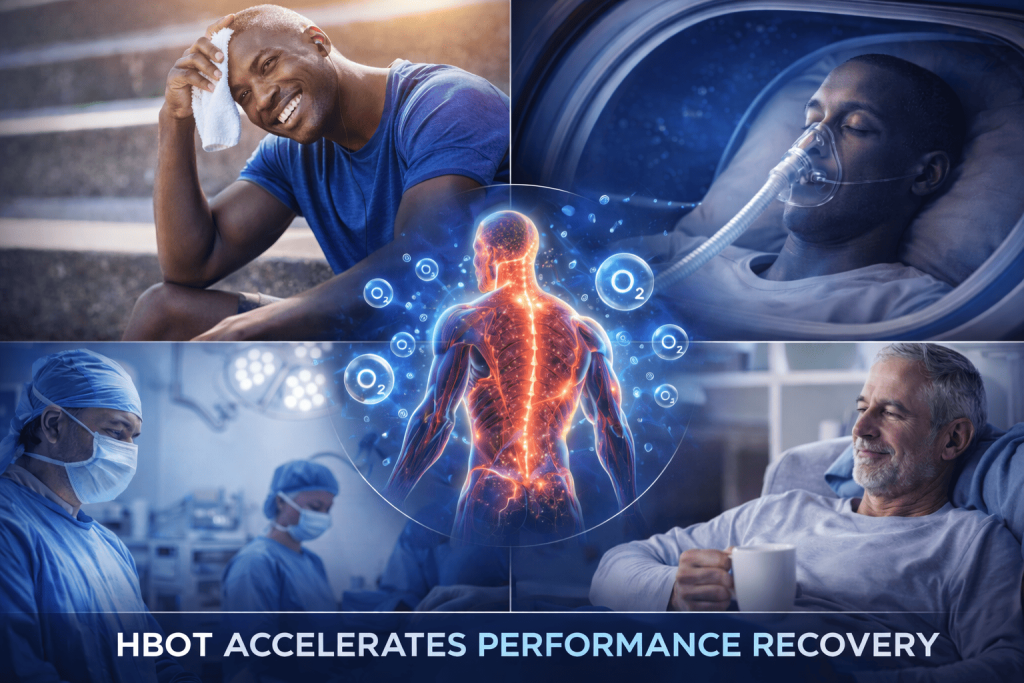
Post-surgical recovery, respiratory rehabilitation, and the recovery of sustained energy after periods of illness or chronic stress are all areas where enhanced oxygen availability provides measurable support. HBOT’s capacity to reduce oxidative stress while simultaneously improving mitochondrial efficiency creates conditions that favor sustained performance rather than gradual decline.
The concept of recovery as a longevity strategy is central to how HBOT should be understood. The body’s ability to repair and restore itself after challenge is one of the most important predictors of long-term health. Interventions that enhance recovery capacity are not luxuries. They are investments in sustained function.
What the Evidence Shows
HBOT has thirteen FDA-approved indications, including decompression sickness, carbon monoxide poisoning, diabetic wound healing, and radiation tissue injury. These established uses are supported by decades of clinical evidence and remain the foundation of hyperbaric medicine.
Beyond these approved indications, a growing body of research supports HBOT’s role in aging and health optimization. Key findings include:
- A landmark 2020 prospective trial from Tel Aviv University demonstrated that sixty HBOT sessions over ninety days increased telomere length by more than twenty percent in peripheral blood mononuclear cells and significantly reduced senescent cell populations in healthy adults over sixty-four. These are two of the most well-established biological markers of aging.
- A 2024 review published in Frontiers in Aging concluded that HBOT plays a meaningful role in vascularization, angiogenesis, collagen production, and cellular regeneration, with therapeutic targets that overlap considerably with the known mechanisms of biological aging.
- A 2025 systematic review evaluating HBOT’s role in anti-aging confirmed reductions in cellular senescence markers (p16INK4a and p21), decreased inflammatory markers (IL-6, NF-κB), enhanced antioxidant activity, and improved cognitive function and memory.
- Multiple randomized controlled trials have demonstrated HBOT’s neuroplasticity effects, including improved cerebral blood flow, enhanced white matter integrity, and significant cognitive improvements in populations ranging from healthy aging adults to post-concussion and post-COVID patients.
These findings are encouraging, but context matters. Most longevity-specific studies involve relatively small sample sizes, and long-term outcome data specifically for aging populations continues to accumulate. HBOT is not a miracle intervention. It is a clinically validated therapy whose evidence base is expanding rapidly and whose mechanisms align with what modern science understands about how the body ages and repairs itself.
What to Expect During a Session
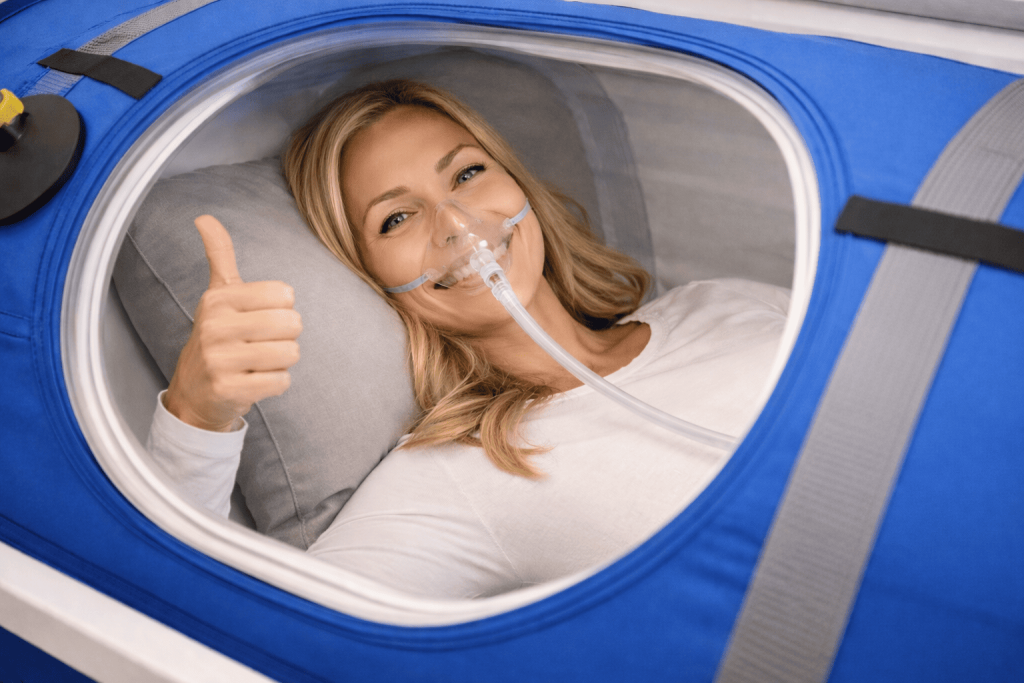
A typical HBOT session lasts sixty to ninety minutes. The patient enters a hyperbaric oxygen chamber, and as pressure gradually increases to the target level, they may feel mild pressure in the ears—similar to the sensation during airplane descent—which resolves easily with standard equalization techniques.
Once at pressure, there is nothing to do but rest. Many patients read, listen to music, meditate, or simply sleep. The experience is quiet, comfortable, and requires no active participation. After the session, pressure returns to normal gradually, and patients can resume normal activities immediately.
Sessions are typically conducted in series. Research protocols often involve forty to sixty sessions for neurological and aging-related applications, while shorter series may be appropriate for recovery-focused goals. The optimal protocol depends on individual health status, goals, and clinical context—which is why medical supervision and individualized planning are essential.
Some patients notice increased energy and mental clarity within the first several sessions. Others experience benefits that are more gradual and best captured through biomarker tracking and clinical assessment over time. As one of our patients described it: the session itself feels like relaxation, but the cumulative effects on energy, clarity, and overall vitality become increasingly apparent.
How HBOT Fits Within a Longevity Strategy
HBOT is most effective when integrated within a broader clinical framework rather than used in isolation. Like any serious medical intervention, its value is maximized when guided by comprehensive diagnostics, individualized treatment planning, and ongoing monitoring.
At Everest Health, hyperbaric oxygen therapy is incorporated as one component of the Methuselah Protocol—a comprehensive longevity framework that integrates advanced diagnostics, biological age assessment, and individualized medical strategy. All therapies, including HBOT, are determined through a collaborative clinician-patient process, ensuring that each individual’s goals, health status, and desired outcomes are central to the care strategy.
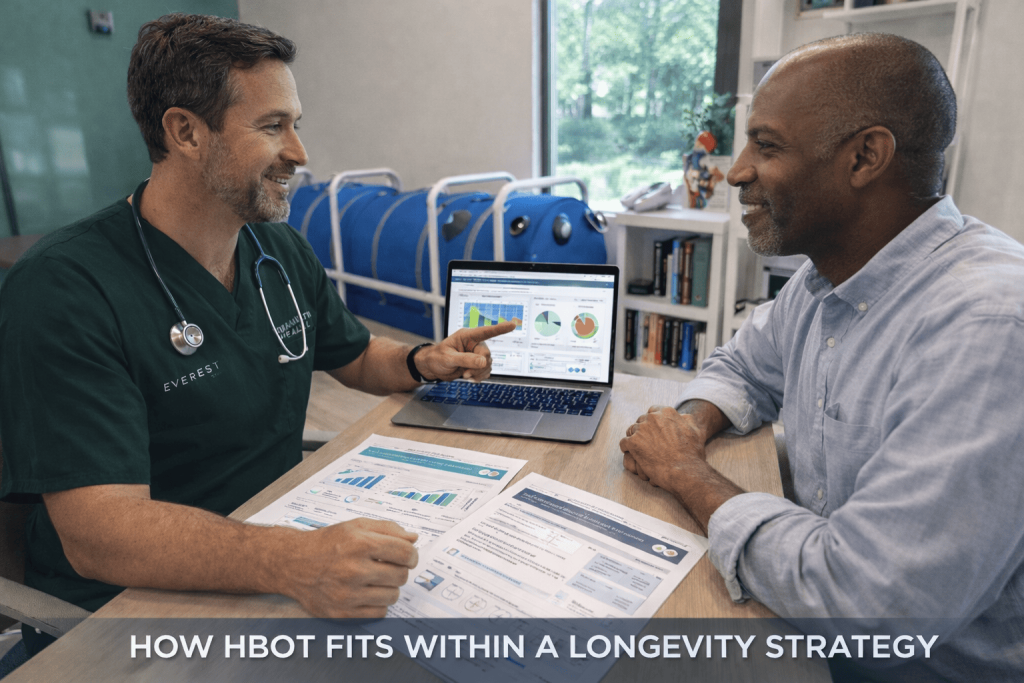
For individuals searching for HBOT recovery near me in the Northern Virginia, Tysons Corner, or greater Washington, D.C. area, Everest Health offers HBOT within a clinician-led medical practice—not a wellness spa or standalone chamber rental. Sessions are supervised, protocols are personalized, and results are tracked through objective biomarkers rather than subjective impressions alone.
HBOT is available as a standalone service or as part of select Everest Health memberships, including the Ascend and Summit tiers, which include bundled HBOT hours alongside advanced diagnostics, coaching, and ongoing clinical oversight.
The Bottom Line
Hyperbaric oxygen therapy is not new, but its role in health optimization and longevity medicine is entering a new chapter. The science supporting its effects on cellular repair, inflammation reduction, brain health, and recovery is substantial and growing. When applied within a structured, medically supervised framework, HBOT offers a meaningful and evidence-based tool for individuals committed to protecting and enhancing their health across decades.
It is not a replacement for foundational health practices. It is not a shortcut. It is a serious clinical therapy whose mechanisms address some of the most important biological processes underlying how we age—and how well we recover from the demands of living.
Click here to schedule a consultation and begin building a strategy for longer, healthier, and more resilient years ahead.
This article reflects current scientific understanding as of early 2026 and is intended for educational purposes only. Always consult a qualified healthcare professional before initiating any medical intervention.
Related FAQs
How many HBOT sessions are typically recommended?
The number of sessions depends on individual goals and clinical context. Research protocols for aging and neurological applications typically involve forty to sixty sessions conducted over several weeks to months. Recovery-focused protocols may require fewer sessions. Your clinician will recommend a personalized plan based on your health assessment, objectives, and response to therapy.
Is hyperbaric oxygen therapy safe?
HBOT has a well-established safety profile when administered under appropriate medical supervision. The most common side effect is temporary ear pressure, similar to what is experienced during air travel. Serious complications are rare and are further minimized through proper screening, individualized protocols, and clinical oversight. HBOT is not recommended for individuals with certain untreated conditions, which is why a medical evaluation prior to treatment is essential. It is essential for safety to use trustworthy, tested chambers. Everest Health uses FDA-cleared chambers which are proven for safety.
Who is a good candidate for HBOT?
HBOT may be appropriate for adults seeking enhanced recovery, inflammation management, cognitive support, or integration of advanced therapies into a longevity-focused care plan. Ideal candidates are proactive about their health, willing to commit to a series of sessions, and interested in tracking progress through objective measures. A clinical evaluation is always conducted to ensure appropriateness and safety before initiating treatment.
Can HBOT be combined with other longevity interventions?
Yes. HBOT is often most effective when layered with other evidence-based strategies such as metabolic optimization, hormone management, targeted supplementation, and structured exercise. At Everest Health, HBOT is integrated within the Methuselah Protocol alongside advanced diagnostics and biological age tracking, ensuring that all interventions work in coordination rather than in isolation.
What conditions does HBOT address beyond its FDA-approved uses?
Beyond its thirteen FDA-approved indications, HBOT is being studied for applications in cognitive enhancement, biological aging, post-concussion recovery, post-COVID neurological symptoms, chronic inflammatory conditions, and general health optimization. While many of these applications remain off-label, the evidence base is growing rapidly. Specifically, some of these off-label researched conditions are traumatic brain injury, post-stroke recovery, dementia, complex regional pain syndrome (CRPS), fibromyalgia, chronic fatigue syndrome, PTSD, treatment-resistant depression (early data), migraine and refractory headache disorders, chronic Lyme/post-infectious syndromes, radiation-induced injury, neuropathy, chronic spinal cord injury, sudden sensorineural hearing loss, retinal artery occlusion, sickle cell crisis (case-based), anemia, osteonecrosis, chronic refractory osteomyelitis, inflammatory bowel disease, refractory gout, and autoimmune or inflammatory pain syndromes.
Any off-label use should be pursued under qualified medical supervision with appropriate monitoring.