The Muscle-First Approach to Healthspan: How to Lose Fat without Losing Lean Mass

The Muscle-First Approach to Healthspan img

Most people approach weight loss with a single metric in mind: the number on the scale. In reality, that number tells us very little about health, metabolic function, or whether the weight loss will actually last.

What matters far more is body composition, specifically, how much of your weight comes from fat versus lean body mass. This distinction is not merely academic. It determines whether weight loss strengthens your metabolism or weakens it, whether you become more resilient with age or more fragile, and whether results persist for years or reverse within months.

At Everest Health, our approach to healthy weight loss, and effective weight loss management, centers on a single foundational principle: protect and build muscle while losing fat. This muscle-first strategy transforms weight loss from a short-term cosmetic goal into a long-term investment in metabolic health, physical function, and longevity.

Why Muscle Is the Metabolic Organ That Changes Everything

Skeletal muscle is not simply tissue for strength or appearance. It is one of the most metabolically active organs in the human body, and one of the most underappreciated.

Muscle tissue increases resting energy expenditure, meaning you burn more calories even at rest. It dramatically improves insulin sensitivity, allowing your body to use food for energy rather than store it as fat. It acts as a metabolic buffer, absorbing excess glucose and fatty acids after meals before they can be diverted into adipose tissue. And it serves as a reservoir of amino acids that support immune function, wound healing, and stress resilience.

Perhaps most critically for anyone pursuing weight loss, muscle mass is the primary determinant of whether your metabolism slows or stays robust during caloric restriction. When people lose weight without protecting muscle, they often experience a progressive decline in metabolic rate, increased hunger, fatigue, and eventual weight regain, frequently exceeding their original weight. This cycle is not a failure of willpower. It is a predictable biological response to muscle loss.

Research consistently demonstrates that individuals who preserve lean mass during weight loss maintain higher metabolic rates, experience less hunger, and achieve dramatically better long-term outcomes. A muscle-first strategy reframes weight loss not as deprivation, but as metabolic optimization.

Nutrition: Protein Is Essential, but Not Sufficient

Adequate protein intake is non-negotiable for anyone attempting to lose fat while preserving muscle. Higher protein intake during caloric restriction reduces lean mass loss, improves satiety, and supports recovery from exercise.

Optimal intake ranges from 0.7 to 1.0 gram of protein per pound of goal body weight daily. This should be distributed across meals rather than concentrated in a single sitting, as muscle protein synthesis responds to repeated protein exposures throughout the day rather than a single large bolus.

However, protein alone does not guarantee muscle preservation. Several additional nutritional principles must be addressed.

Micronutrient sufficiency matters. Iron, magnesium, zinc, and B vitamins all play roles in energy metabolism, muscle function, and hormonal balance. Deficiencies in any of these can impair training adaptation and recovery.

Strategic carbohydrate timing supports resistance training performance and glycogen replenishment. Adequate healthy fats maintain hormonal health, including testosterone and thyroid function.

And contrary to popular belief, the goal is often to eat more, not less—more vegetables, more fiber, more nutrient-dense whole foods that create satiety without excessive caloric load. Plant-forward eating patterns rich in vegetables, fruits, legumes, and whole grains are consistently associated with greater fat loss and long-term weight maintenance compared to restrictive Western diets. The connection between healthy eating and weight loss is well established in the research.

The key insight is that sustainable fat loss requires feeling satisfied, not starved. Healthy eating for weight loss is not about deprivation—hunger is not a badge of honor. It is a signal that your approach may not be sustainable.

This is where a personalized weight loss plan becomes essential. Age, sex, activity level, insulin sensitivity, medications, and prior dieting history all influence optimal strategy. A structured, individualized approach is a core component of our healthy weight loss program and a key reason our patients achieve lasting results.

The Leucine Threshold: A Practical Tool for Muscle Preservation

Leucine is an amino acid that plays a uniquely important role in muscle-preserving weight loss. It directly activates the mTOR pathway, the same pathway modulated by longevity interventions, to initiate muscle protein synthesis.

During caloric restriction, anabolic signals are suppressed and catabolic signals increase. Leucine acts as the dominant override, telling your body to build and repair muscle even when energy intake is reduced.

This is particularly important for individuals over 40, whose muscles become progressively resistant to anabolic signaling and require higher protein thresholds to maintain synthesis.

Aim for 25–35 grams of high-quality protein per meal to reliably trigger muscle protein synthesis. Because the signal activates with leucine intake and automatically deactivates after 2–4 hours, smaller and more frequent protein feedings may outperform the traditional three-meal structure for muscle preservation.

Plant-based eaters can achieve adequate leucine by combining diverse protein sources or supplementing with leucine or essential amino acids.

Exercise: Resistance Training Is the Cornerstone

If fat loss is the goal, resistance training is not optional, it’s essential.

Why?

  • It sends a powerful signal to preserve muscle during calorie deficits
  • It improves insulin sensitivity independent of weight loss
  • It increases post-exercise energy expenditure

Cardio has benefits, but excessive endurance training without strength work often accelerates muscle loss.

An ideal structure:

  • 3–4 days/week of progressive resistance strength training
  • Low-to-moderate intensity cardio in between muscle building days, aiming for a minimum of 150 minutes weekly
  • Movement that supports joints, balance, and recovery daily (stretching, yoga, tai chi)

Progression can happen in several evidence-based ways to build muscle:

  1. More load- Increasing the weight you lift over time
  2. More repetitions- Doing more reps with the same weight
  3. More time- Increasing total work performed
  4. More precision- Slower tempo, deeper range, or stricter form
  5. More complexity- Moving from machines → free weights → unilateral movements

Sleep: The Hidden Driver of Body Composition

Chronic sleep deprivation disrupts nearly every system involved in fat loss and muscle preservation. It increases cortisol, reduces testosterone and growth hormone, worsens insulin resistance, elevates hunger hormones, and accelerates muscle protein breakdown.
Studies demonstrate that people in identical caloric deficits who sleep less lose significantly more lean mass and less fat, even when protein intake and exercise are controlled.

Sleep is not a luxury or an afterthought. It is a biological requirement for successful weight body composition change and a foundational pillar of any healthy lifestyle for weight loss.

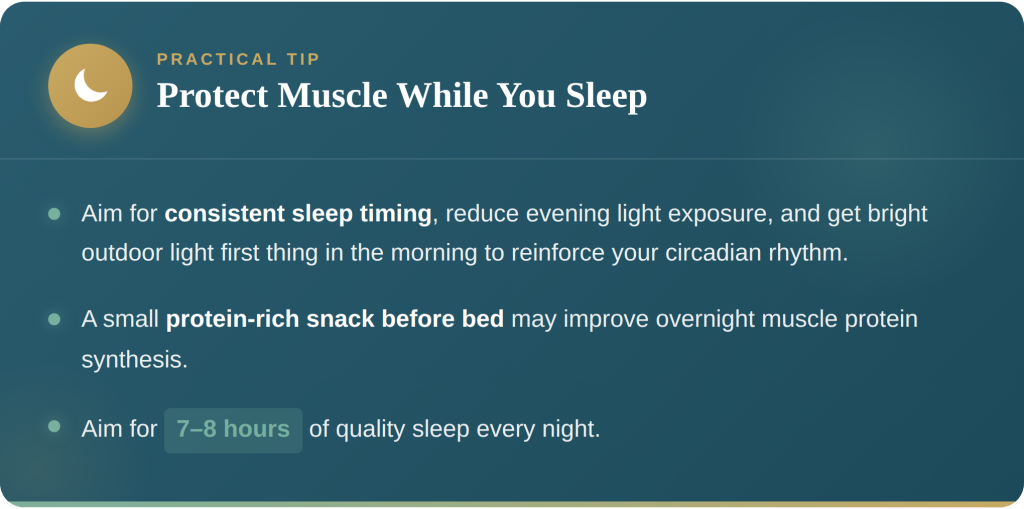
Aim for seven to eight hours nightly. Prioritize consistent sleep timing, reduce evening light exposure, and seek bright natural light in the morning to reinforce circadian rhythm. A small protein-rich snack before bed may support overnight muscle protein synthesis.

Fasting: Strategic, Not Extreme

Intermittent fasting can be a useful tool for some individuals. Research suggests it may improve insulin sensitivity, regulate appetite, reduce emotional eating patterns, and enhance metabolic flexibility.

However, fasting is not universally appropriate. When done improperly or by individuals for whom it is contraindicated, risks include muscle loss, hormonal disruption, fatigue, and impaired training performance.

When used strategically, fasting can complement a muscle-first weight loss program. But it should never replace fundamental attention to protein intake, nutrient timing, and resistance training.

Stress, Mindset, and Behavioral Change

Chronic psychological stress promotes fat storage and muscle breakdown through elevated cortisol and inflammatory pathways. It drives emotional eating, undermines sleep quality, and depletes the cognitive resources needed for consistent decision-making.

Addressing stress is not a soft skill or optional add-on. It is a biological intervention with measurable effects on body composition outcomes. Combined with proper nutrition and exercise, these lifestyle changes to lose weight create lasting transformation.

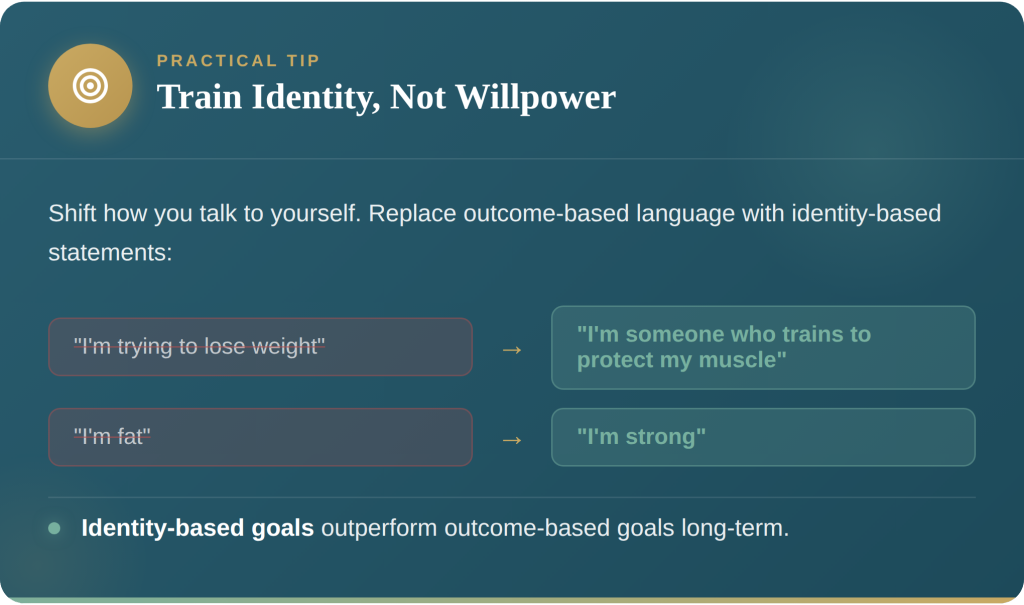
train-identity-not-willpower

Similarly, successful transformation requires more than information and motivation. It requires skill-building, identity-based habit formation, and judgment-free accountability. Most people do not fail because they lack knowledge or willpower. They fail because behavior change is genuinely difficult and fat loss often works against the body’s self-protective mechanisms.

This is why coaching is integral to our program. It bridges the gap between knowing and doing, especially during plateaus, setbacks, or periods of high stress. True weight loss management requires addressing all of these factors together.

Supplements That Support the Muscle-First Approach

Evidence-based supplements can support muscle-sparing fat loss when layered onto a foundation of proper nutrition, training, and recovery.

Creatine monohydrate improves strength, power output, and lean mass retention. Omega-3 fatty acids support muscle protein synthesis signaling and reduce inflammation. Vitamin D is essential for muscle function and immune health. Magnesium supports sleep quality and exercise recovery.

NAD+ and its precursors are emerging tools in metabolic health and aging research. NAD+ is essential for mitochondrial function, helping cells efficiently convert nutrients into usable energy. It activates sirtuins, which are enzymes involved in fat metabolism, insulin sensitivity, and cellular repair. While NAD+ does not directly build muscle, it supports the metabolic environment that allows muscle preservation and fat oxidation to occur optimally.

These tools work best when integrated into a comprehensive program, not used in isolation.

The Bottom Line: Weight Loss That Builds Healthspan

True success is not simply losing weight. It is maintaining that loss while becoming stronger, more metabolically resilient, and healthier over time.

This is why our healthy weight loss program focuses on preserving and building muscle, optimizing metabolic health, supporting sustainable behavior change, and creating systems that last for life.

At Everest Health, weight management is integrated within the Methuselah Protocol, a comprehensive longevity framework combining advanced diagnostics, biological age assessment, and individualized medical strategy. The objective is not simply a smaller body. It is a stronger, more resilient one.

If you are tired of approaches that shrink your body temporarily but weaken your metabolism permanently, it may be time to rethink what weight loss should look like.

Click here to schedule a consultation and begin building a strategy for lasting results, and longer, healthier years ahead.

This article reflects current scientific understanding as of early 2026 and is intended for educational purposes only. Always consult a qualified healthcare professional before initiating any weight loss program or medical intervention.

Related FAQs

Why does muscle matter so much for weight loss?

Muscle tissue is metabolically active and directly determines your resting metabolic rate. When you lose weight without protecting muscle, your metabolism slows, hunger increases, and weight regain becomes highly likely. Preserving muscle during fat loss keeps your metabolism strong and dramatically improves long-term success.

Research supports 0.7–1.0 gram of protein per pound of goal body weight daily for optimal muscle preservation during caloric restriction. This should be distributed across multiple meals rather than consumed all at once, as muscle protein synthesis responds best to repeated protein exposures throughout the day.

Cardiovascular exercise has genuine health benefits, but excessive endurance training without resistance work can accelerate muscle loss. The most effective approach combines resistance training as the foundation with moderate cardio for cardiovascular health and recovery.

Yes, particularly for individuals who are new to resistance training, returning after a break, or carrying significant excess body fat. This process—called body recomposition—requires adequate protein, progressive resistance training, and sufficient recovery. It is slower than pure weight loss but produces superior long-term outcomes.

It is absolutely critical. Sleep deprivation impairs insulin sensitivity, increases hunger hormones, elevates cortisol, and shifts weight loss away from fat and toward muscle. Studies show that people in identical caloric deficits who sleep less lose more muscle and less fat. Prioritizing seven to eight hours nightly is one of the highest-impact interventions available.


Parking Instructions and Directions to Our Office


Parking Location:

We offer convenient on-site parking in our spacious garage, located between Patsy's Restaurant and Equinox.

Parking Details:

Feel free to park in any non-reserved space on the first floor. Enjoy complimentary parking for the first 2.5 hours.

Getting to Our Office:

Upon parking, please take the elevator or stairs to the second floor. From there, you can cross the skywalk directly to our office, which is the first suite on the left. We look forward to welcoming you!


If you have any questions or need further assistance while traveling, please don’t hesitate to call us at (866) 383-7888 OR text (571) 400- 2341. We look forward to welcoming you to our office!